
Platforms
Biofabrication and 3D printing
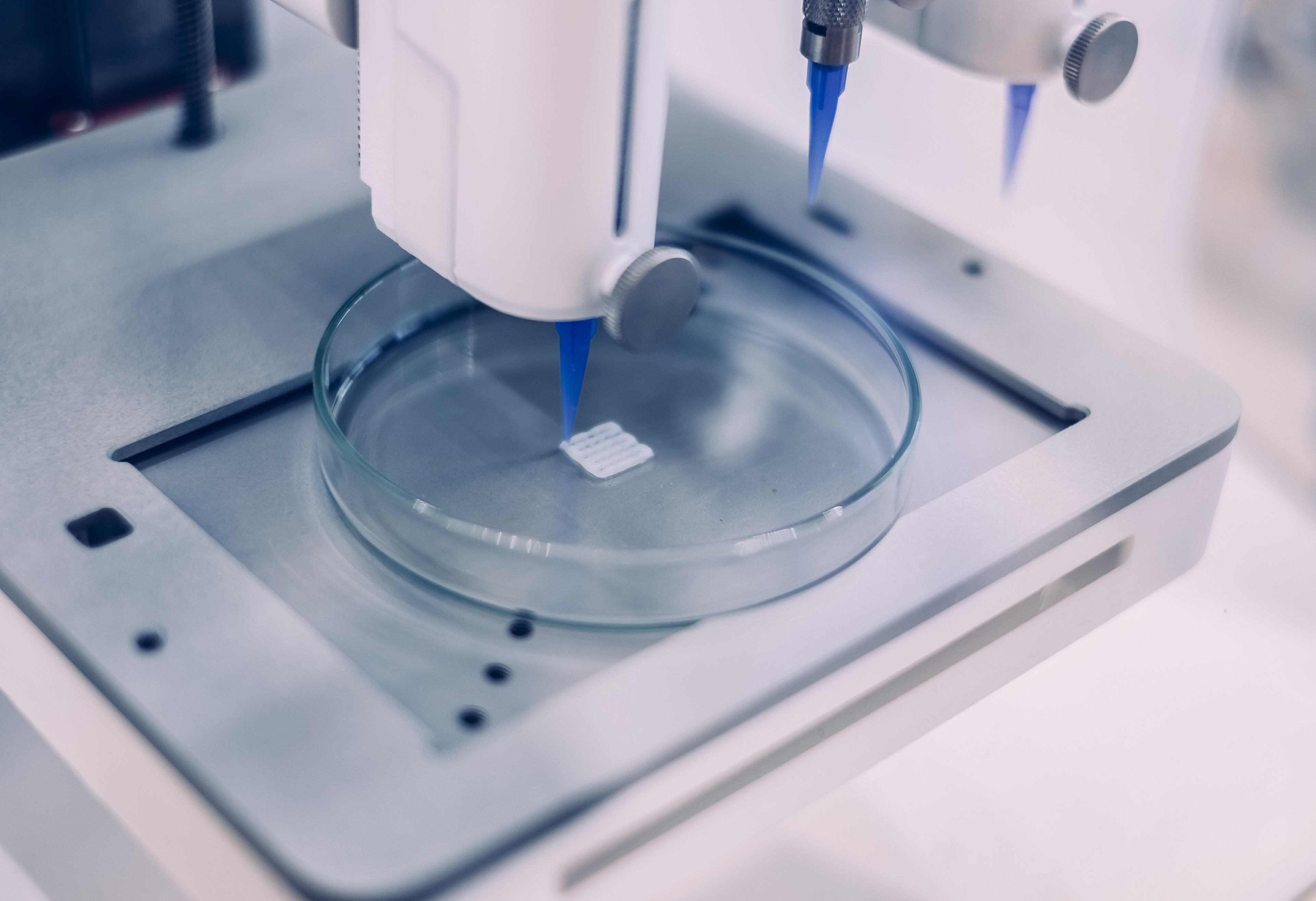
Additive-manufacturing and bioprinting approaches that organise biomaterials, cells and conductive components with spatial precision.
Overview
About this research
Additive-manufacturing and bioprinting approaches that organise biomaterials, cells and conductive components with spatial precision.
People
Research team

Director of TERG · Professor of Bioengineering and Regenerative Medicine · Principal Investigator
Fergal O’Brien
Biomaterials · Tissue engineering · Regenerative medicine

Senior Lecturer · Principal Investigator
Ciara Murphy
Biomaterials · Bioengineering · Bioinorganic ions


Research Fellow · Principal Investigator, Biomimetic Design Lab
Ian Woods
Electroconductive biomaterials · Gene therapeutics · Neurological disease models

Senior Lecturer · Principal Investigator
Olga Piskareva
Biomaterials · Drug development · Drug resistance
Outputs
Related publications
3D-Printing of Electroconductive MXene-Based Micro-Meshes in a Biomimetic Hyaluronic Acid-Based Scaffold Directs and Enhances Electrical Stimulation for Neural Repair Applications
The triad in current neuroblastoma challenges: Targeting antigens, enhancing effective cytotoxicity and accurate 3D in vitro modelling
Collagen silver-doped hydroxyapatite scaffolds reinforced with 3D printed frameworks for infection prevention and enhanced repair of load-bearing bone defects.
An injectable and 3D printable pro-chondrogenic hyaluronic acid and collagen type II composite hydrogel for the repair of articular cartilage defects
Articulation inspired by nature: a review of biomimetic and biologically active 3D printed scaffolds for cartilage tissue engineering.
3D-Printed Gelatin Methacrylate Scaffolds with Controlled Architecture and Stiffness Modulate the Fibroblast Phenotype towards Dermal Regeneration.
Collaborate
Bring a problem worth solving.
We welcome conversations with academic, clinical and industry partners whose expertise can create a stronger route to impact.
Contact the lab