
Platforms
Biomaterial scaffolds
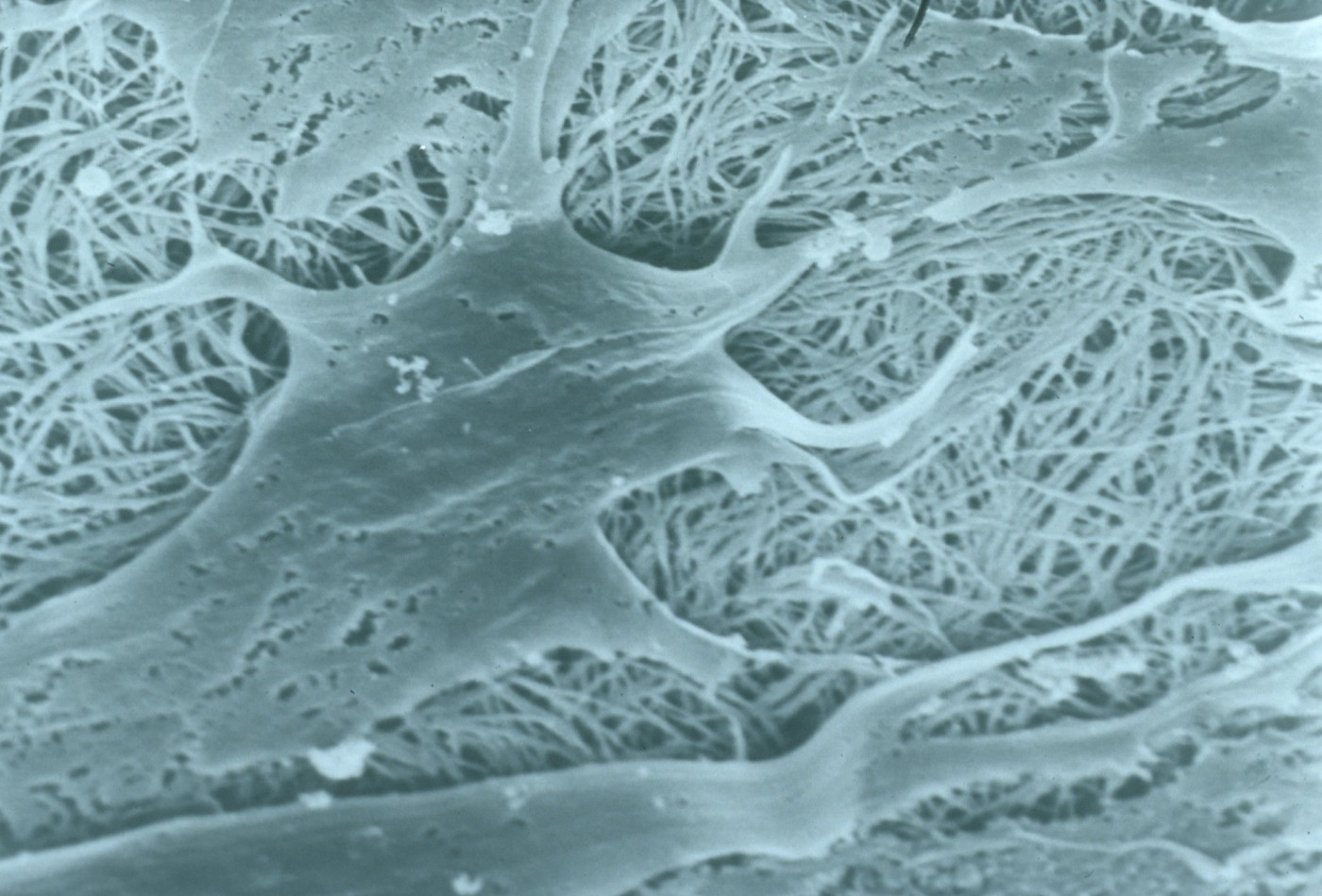
Natural-polymer scaffolds engineered to reproduce extracellular-matrix structure, guide cell behaviour and support tissue repair.
Overview
About this research
Natural-polymer scaffolds engineered to reproduce extracellular-matrix structure, guide cell behaviour and support tissue repair.
People
Research team

Director of TERG · Professor of Bioengineering and Regenerative Medicine · Principal Investigator
Fergal O’Brien
Biomaterials · Tissue engineering · Regenerative medicine



Senior Lecturer · Principal Investigator
Ciara Murphy
Biomaterials · Bioengineering · Bioinorganic ions


Senior Lecturer · Principal Investigator
Olga Piskareva
Biomaterials · Drug development · Drug resistance

Outputs
Related publications
Laminin 1 enhances the angiogenic and neurogenic potential of collagen-based scaffolds for complex wound healing applications.
Scaffold-mediated miRNA-155 inhibition promotes regenerative macrophage polarisation leading to anti-inflammatory, angiogenic and neurogenic responses for wound healing.
Advances in tissue engineering strategies for periodontal and endodontic regeneration: Current therapies and future trends for disease treatment and tissue repair in the oral cavity.
Development of a PTEN-siRNA activated scaffold to promote axonal regrowth following spinal cord injury.
Biomimetic Scaffolds Enhance iPSC Astrocyte Progenitor Angiogenic, Immunomodulatory, and Neurotrophic Capacity in a Stiffness and Matrix-Dependent Manner for Spinal Cord Repair Applications
Development of a VEGF-activated scaffold with enhanced angiogenic and neurogenic properties for chronic wound healing applications.
Neurotrophic extracellular matrix proteins promote neuronal and iPSC astrocyte progenitor cell- and nano-scale process extension for neural repair applications.
Collagen silver-doped hydroxyapatite scaffolds reinforced with 3D printed frameworks for infection prevention and enhanced repair of load-bearing bone defects.
Magnesium Ion-Mediated Regulation of Osteogenesis and Osteoclastogenesis in 2D Culture and 3D Collagen/Nano-Hydroxyapatite Scaffolds for Enhanced Bone Repair.
A biomimetic reinforced type I/II collagen and hyaluronic acid scaffold in combination with a chondral biomaterial fixation technique for large articular cartilage defect repair: A pilot pre-clinical study.
Mobilizing Endogenous Progenitor Cells Using pSDF1α-Activated Scaffolds Accelerates Angiogenesis and Bone Repair in Critical-Sized Bone Defects
A Multifunctional Scaffold for Bone Infection Treatment by Delivery of microRNA Therapeutics Combined With Antimicrobial Nanoparticles.
Extracellular matrix-inspired biomaterials for wound healing.
A Biomimetic, Bilayered Antimicrobial Collagen-Based Scaffold for Enhanced Healing of Complex Wound Conditions
Assessment of Cell Cytotoxicity in 3D Biomaterial Scaffolds Following miRNA Transfection
Dual scaffold delivery of miR-210 mimic and miR-16 inhibitor enhances angiogenesis and osteogenesis to accelerate bone healing.
The Manufacture and Characterization of Biomimetic, Biomaterial-Based Scaffolds for Studying Physicochemical Interactions of Neural Cells in 3D Environments.
Development of miR-26a-activated scaffold to promote healing of critical-sized bone defects through angiogenic and osteogenic mechanisms.
Biomimetic Scaffolds for Spinal Cord Applications Exhibit Stiffness-Dependent Immunomodulatory and Neurotrophic Characteristics.
Highly Porous Type II Collagen-Containing Scaffolds for Enhanced Cartilage Repair with Reduced Hypertrophic Cartilage Formation.
Articulation inspired by nature: a review of biomimetic and biologically active 3D printed scaffolds for cartilage tissue engineering.
3D-Printed Gelatin Methacrylate Scaffolds with Controlled Architecture and Stiffness Modulate the Fibroblast Phenotype towards Dermal Regeneration.
Three-dimensional In Vitro Biomimetic Model of Neuroblastoma using Collagen-based Scaffolds.
Rapid bone repair with the recruitment of CD206(+)M2-like macrophages using non-viral scaffold-mediated miR-133a inhibition of host cells.
Layered Double Hydroxide as a Potent Non-viral Vector for Nucleic Acid Delivery Using Gene-Activated Scaffolds for Tissue Regeneration Applications.
Hydroxyapatite Particle Shape and Size Influence MSC Osteogenesis by Directing the Macrophage Phenotype in Collagen-Hydroxyapatite Scaffolds.
Collaborate
Bring a problem worth solving.
We welcome conversations with academic, clinical and industry partners whose expertise can create a stronger route to impact.
Contact the lab