
Clinical applications
Spinal cord, peripheral nerve and neural repair
Biomimetic scaffolds, gene therapeutics and electroconductive implants for neurotrauma repair and neurological disease.
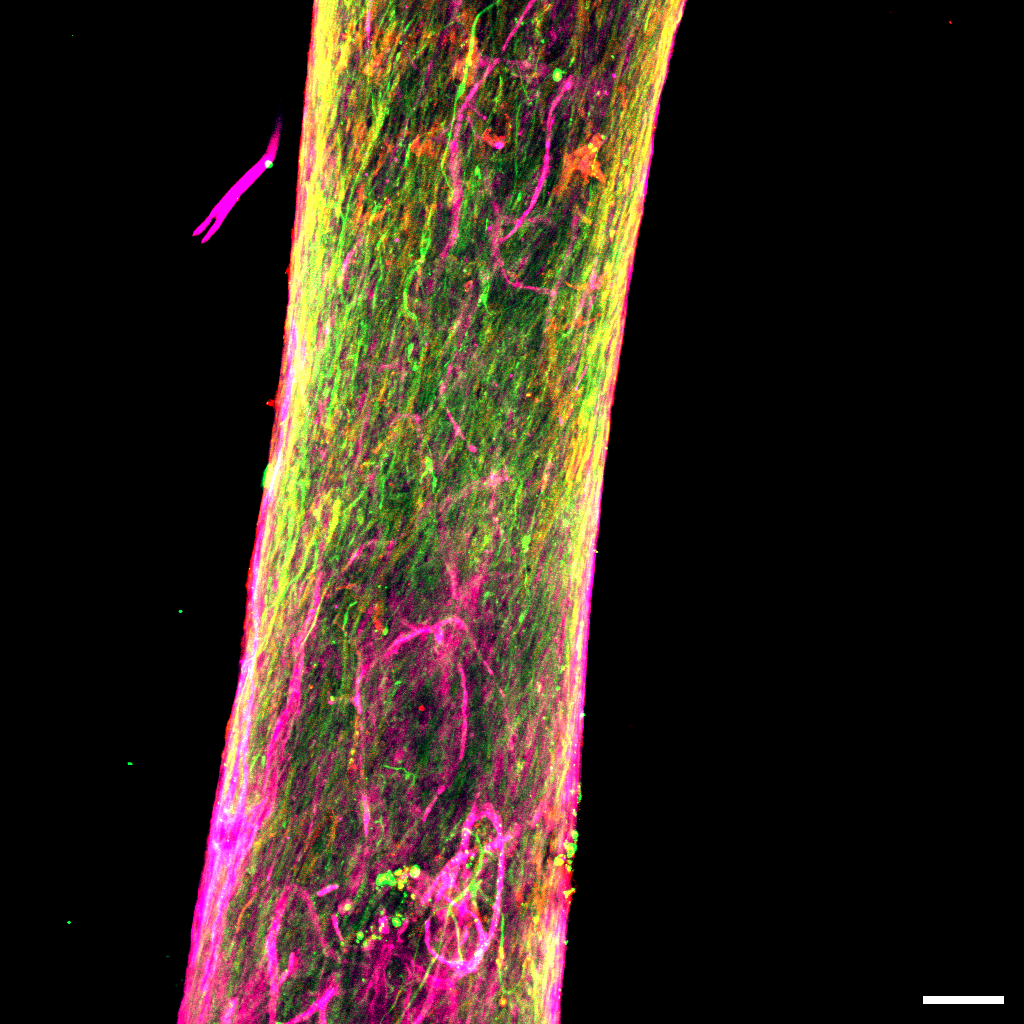
Overview
About this research
Biomimetic scaffolds, gene therapeutics and electroconductive implants for neurotrauma repair and neurological disease.
People
Research team

Director of TERG · Professor of Bioengineering and Regenerative Medicine · Principal Investigator
Fergal O’Brien
Biomaterials · Tissue engineering · Regenerative medicine

Research Fellow · Principal Investigator, Biomimetic Design Lab
Ian Woods
Electroconductive biomaterials · Gene therapeutics · Neurological disease models

Senior Lecturer · Principal Investigator
Olga Piskareva
Biomaterials · Drug development · Drug resistance
Outputs
Related publications
Laminin 1 enhances the angiogenic and neurogenic potential of collagen-based scaffolds for complex wound healing applications.
Scaffold-mediated miRNA-155 inhibition promotes regenerative macrophage polarisation leading to anti-inflammatory, angiogenic and neurogenic responses for wound healing.
Development of a PTEN-siRNA activated scaffold to promote axonal regrowth following spinal cord injury.
3D-Printing of Electroconductive MXene-Based Micro-Meshes in a Biomimetic Hyaluronic Acid-Based Scaffold Directs and Enhances Electrical Stimulation for Neural Repair Applications
Biomimetic Scaffolds Enhance iPSC Astrocyte Progenitor Angiogenic, Immunomodulatory, and Neurotrophic Capacity in a Stiffness and Matrix-Dependent Manner for Spinal Cord Repair Applications
Development of a VEGF-activated scaffold with enhanced angiogenic and neurogenic properties for chronic wound healing applications.
Neurotrophic extracellular matrix proteins promote neuronal and iPSC astrocyte progenitor cell- and nano-scale process extension for neural repair applications.
The Manufacture and Characterization of Biomimetic, Biomaterial-Based Scaffolds for Studying Physicochemical Interactions of Neural Cells in 3D Environments.
Biomimetic Scaffolds for Spinal Cord Applications Exhibit Stiffness-Dependent Immunomodulatory and Neurotrophic Characteristics.
Three-dimensional In Vitro Biomimetic Model of Neuroblastoma using Collagen-based Scaffolds.
A Context-Dependent Role for MiR-124-3p on Cell Phenotype, Viability and Chemosensitivity in Neuroblastoma in vitro.
Collaborate
Bring a problem worth solving.
We welcome conversations with academic, clinical and industry partners whose expertise can create a stronger route to impact.
Contact the lab